
Mastitis is swelling in the breast tissue that can sometimes lead to an infection. It is often caused by having too much milk or a change in the natural bacteria in your breasts. After giving birth, you may have engorgement (painful swelling in the breasts). This is not mastitis and should go away within two weeks.
Signs of Mastitis:
Mastitis usually happens in one breast and can cause your breast to be swollen or red.
Other symptoms might include:
If you don’t start feeling better within 24–48 hours, call your healthcare provider. You might need antibiotics. While not all cases of mastitis are caused by infection, it’s important to take the full course of antibiotics if prescribed.
It’s safe to breastfeed while you have mastitis. Nursing can help reduce engorgement, ease symptoms, and speed healing.
Feed your baby from the unaffected breast first, then offer the affected side. Don’t try to fully empty your breasts. If pumping, only remove enough milk to meet your baby’s needs.
Apply ice packs hourly or as needed. Avoid using heat, as it can increase swelling. A warm shower is okay, but don’t place heat packs directly on your breasts.
Drink plenty of water and get as much rest as you can to help your body heal.
Avoid tight bras or those with underwire.
Make sure your baby is latching deeply and comfortably. A good latch helps drain milk effectively. WIC can help if you’re having trouble with latching.
Ask your doctor or pharmacist about over-the-counter pain relievers that are safe to use.
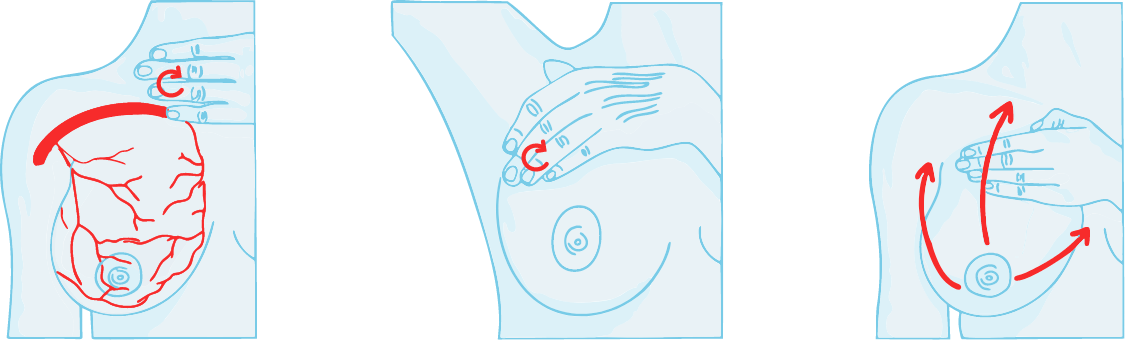
Use light, gentle strokes with your fingers, starting at the nipple and moving toward your armpit or collarbone. Massage during or right before feeding can help with milk flow and ease discomfort. Avoid pressing too hard, which might worsen symptoms. Stop if it hurts or your symptoms get worse, and talk to your healthcare provider.

It’s safe to feed your baby breast milk when you have mastitis. Your milk might look clumpy or stringy, but it’s still healthy for your baby.
If your symptoms don’t improve or you’re unsure about anything, reach out to WIC or your healthcare provider for help.