Skip to Content Skip to Footer
New Jersey WIC logo
New Jersey Wic Logo
Mom Smiling with Daughter expand

Protect Your Baby from Cronobacter

  • Home
  • Live Well Blog
  • Protect Your Baby from Cronobacter

October 23, 2024 Infant

A germ you’ve probably never heard of could be very dangerous to your baby.

Cronobacter is a common germ found in many places—the yard, kitchen, and living room, just to name a few. It can get into our homes from our shoes or hands and can spread as we touch countertops and utensils. Cronobacter can also be found in dry foods like powdered infant formula and can contaminate breast pumps and other dry surfaces.

Should You Be Concerned About Cronobacter?

Although Cronobacter infection is rare, it can be life-threatening. It’s most dangerous for babies less than 2 months old, babies born prematurely, and babies who have weakened immune systems.

Cronobacter can make babies very sick. For babies under 12 months, symptoms include:

  • Fever
  • Poor feeding
  • Excessive crying
  • Very low energy
  • Seizures
  • Grunting breaths
  • Abnormal body movements

If your baby shows any of these symptoms, take them to a doctor right away. If left untreated, Cronobacter infections can lead to dangerous problems, like:

  • Bloodstream infections (sepsis)
  • Meningitis
  • Swelling of the lining around the brain and spinal cord
  • Serious, long-term brain problems

How Can You Protect Your Baby from Cronobacter?

check-mark

Breastfeed if you can. Even if you can only breastfeed for a few months, it can help protect your baby from getting sick.

mark explanation

If your baby is at high-risk, and you cannot breastfeed, the Centers for Disease Control and Prevention (CDC) recommends using ready-to-feed infant formula. WIC may require a prescription from your healthcare provider to allow ready-to-feed formula. Contact WIC to learn more.

Safely prepare formula and store breastmilk. No matter your baby’s age, it’s important to make food safety a priority:

check-mark

Always wash hands with soap and water for 20 seconds before preparing stored breast milk or formula. If water isn’t available, use hand sanitizer with at least 60% alcohol.

check-mark

Clean and sanitize countertops and work surfaces that may touch bottles, nipples, or breast pump parts. Use a disinfecting wipe or paper towel with a cleaning solution.

check-mark

Clean and sanitize nipples, rings, bottles, and breast pump parts in the dishwasher or a clean wash basin after every feeding. Don’t wash in the kitchen sink as it can have germs. Let everything air dry and store in a clean, protected area.

When shopping for formula, make sure it will not expire soon, and is not dented or rusted. Store unopened formula in a cool place. If you use powdered formula:

  • Keep it dry by putting the top on right away after using it.
  • Have completely dry hands when scooping out formula.
  • Make sure the scoop is dry before putting it back into the container.
  • Keep the lid clean; do not put the lid face down on the counter.

Extra Steps to Take if Your Baby is at High Risk

If preparing powdered or concentrated formula, boil the water you’ll use and let it cool for 5 minutes before mixing with the formula. If there is a “do not boil” alert, or you cannot boil the water, use bottled water instead. Follow the formula label instructions for mixing. Always measure the water first, and then add the formula. Before offering to your baby, let it cool so it doesn’t burn their mouth.

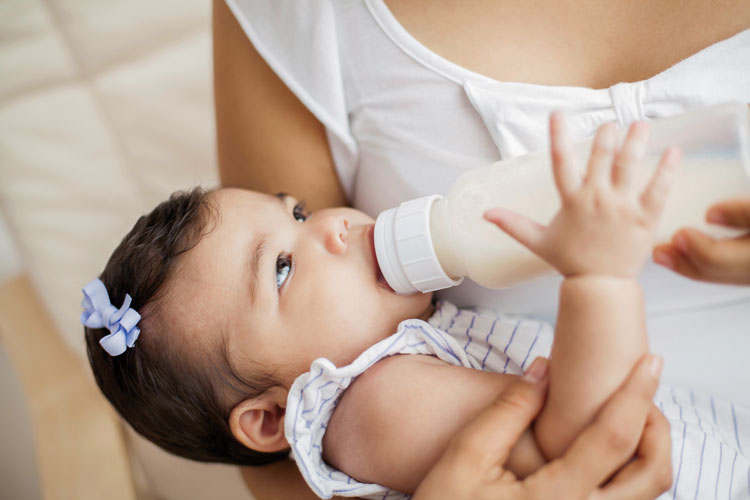
Mom feeding Daughter

Sanitizing is an extra step after washing bottles, nipples, and pumps to make sure all germs are killed. Feeding items should be sanitized once daily for high-risk babies. Also sanitize the things you use to wash feeding items like the bottle brush and basin.

Wash equipment in the dishwasher with a heat dry or sanitize setting, or boil items in a covered pot of water for 5 minutes. Remove items with clean tongs and cool on a clean cloth or paper towel.

If boiling or using a dishwasher is not an option, use a diluted bleach solution. In a clean basin (only used for washing infant feeding items) mix 2 teaspoons of unscented bleach with 1 gallon of water (16 cups) or 1 teaspoon with 8 cups of water. Put all items underwater and soak for at least 2 minutes. Squeeze the solution through nipple holes. Remove with clean tongs and place on a clean, unused dish towel or paper towel in an area protected from dust and dirt. Air dry thoroughly before storing. There is no need to rinse the items or use a towel to dry.

Taking extra steps to keep things clean may take a little longer, but it’s worth it to keep your baby safe.

To learn more about Cronobacter, visit: https://www.cdc.gov/cronobacter/about/index.html

REFERENCES:

How to Clean, Sanitize and Store Infant Feeding Items Frequently Asked Questions. CDC. April 16, 2024. https://www.cdc.gov/hygiene/faq/index.html

Infant Formula Preparation and Storage.
https://www.cdc.gov/nutrition/infantandtoddlernutrition/formula-feeding/infant-formula-preparation-and-storage.html

Protect Your Baby from Cronobacter.
https://www.cdc.gov/cronobacter/pdf/cronobacter-prevention-infographic-html.pdf

Cronobacter sakazakii
https://www.fda.gov/food/foodborne-pathogens/cronobacter-sakazakii

https://www.hhs.texas.gov/sites/default/files/documents/doing-business-with-hhs/provider-portal/wic/foods/tx-wic-formulary.pdf

Author: Bridget Swinney MS, RDN, LD

  • Infant
    • When to Start Peanut and Egg to Help Prevent Allergies
    • The Basics of Paced Bottle-Feeding
    • How Do I Know If My Baby Could Be Tongue-Tied?
    • Protect Your Baby from Cronobacter
    • Exploring the World with Baby – Sensory Play
  • Children
    • Shopping With Kids: A Simple Way to Help Them Like More Foods
    • Pumpkin Fun: Free and Healthy Activities for Kids Under 5
    • Letting Your Child Play with Food Can Be a Good Thing
    • Is Snack Time Treat Time?
    • Fun Ways to Learn About Healthy Food and Get Moving!
  • General /Family
    • The 2025-2030 Dietary Guidelines for Americans – What Families Need to Know
    • Finding Calm When Life Gets Busy: Stress-Management for Parents
    • February Is National Heart Month: Simple Ways to Show Your Heart Some Love
    • 10 Ways to Enjoy Avocados – And Helpful Tips to Feed with Confidence
    • Food, Feelings, and Finding Balance: Understanding Disordered Eating
  • Women
    • Newborn Hunger Cues: How to Know When Your Baby Is Hungry or Full
    • How to Know Your Baby Is Getting Enough Breastmilk
    • Breastfeeding Through Growth Spurts and Sleep Changes
    • Baby Blues… or Is It Something More?
    • Gut Health and Gestational Diabetes
  • Recipes
    • Heart-Healthy Recipe: Banana Berry Oatmeal Cups
    • Is the Chia Seed Challenge Worth It?
    • Extra Vegetables Quiche
    • Easy Pumpkin Muffins
    • Confetti Bean Salad

  • Email
  • SMS
If you are using multiple emails, separate them with commas.

Error: Contact form not found.